
How to Cope with the Two-Week Wait After an IVF Embryo Transfer

You've made it through the injections, the monitoring, the retrieval, and the transfer. You've navigated the technical and physical hurdles of IVF. Now comes the part that is often overlooked but is equally as hard: The Two-Week Wait (TWW).
This period is not just a wait; it's an emotional limbo—a grueling test of hope mixed with absolute dread. You may be struggling to reconcile the immense hope you hold for your embryo with the constant, intrusive fear of failure. Hypervigilance during this stage is extremely common—your brain is scanning for information in an attempt to feel a sense of control, not because you’re doing anything wrong.
At Toronto Therapy Practice, we specialize in (In)Fertility Therapy and understand the unique intensity of TWW anxiety. We want to start with the most important clinical truth: Your emotions cannot fail your cycle.
This two-week period is not a masterclass in emotional control; it is an exercise in self-compassion. Our goal is to give you concrete, clinical strategies to contain the anxiety, remove the guilt, and simply be in this moment of profound uncertainty.
Challenging the Myth: Your Stress Will Not Stop Implantation
If you are fighting yourself to "stay relaxed," you are likely increasing your stress. This pressure—the belief that your anxiety will prevent implantation—is one of the biggest emotional burdens of the TWW.
The Clinical Truth
Numerous studies conducted on IVF outcomes have demonstrated that stress, anxiety, and worry levels do not significantly impact implantation or pregnancy rates. Recent prospective studies and meta-analyses consistently show no meaningful association between pre-treatment anxiety or perceived stress and IVF success.
Your body is strong, smart, and working hard regardless of whether your thoughts are positive or negative. Knowing this frees you from the massive, unfair burden of "performing" emotional wellness for the sake of your cycle. The goal is to free yourself from the guilt of worrying, not to eliminate the worry itself.
Clinical Strategy 1: Containing the Obsession
When anxiety hits, it demands immediate attention. When we try to suppress a thought, it returns with a vengeance. The key to coping is not fighting the thought, but containing it.
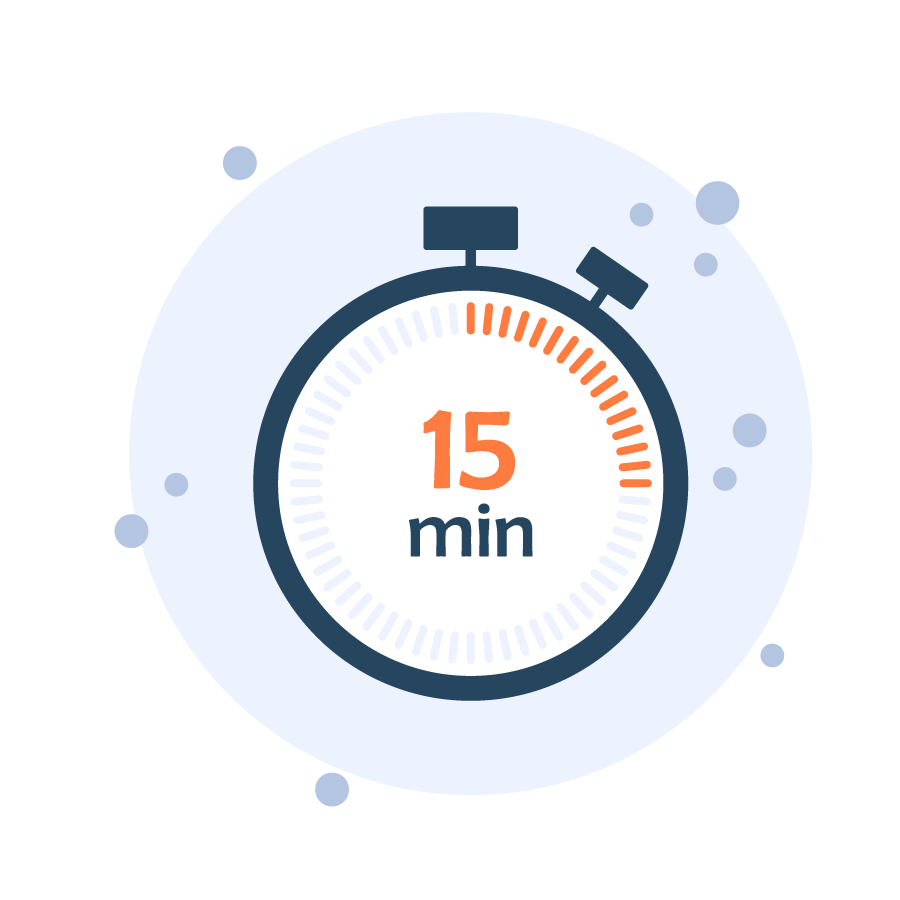
The 15-Minute Worry Window
This technique, often used in Cognitive Behavioral Therapy (CBT), is highly effective for TWW anxiety:
Schedule It: Set aside 15 minutes a day (e.g., 5:00 PM) as your exclusive Worry Window.
Park the Thoughts: Throughout the day, when an anxious thought, symptom, or urge to Google appears, do not engage. Simply write the thought down in a designated notebook and tell yourself, "That's parked until 5 PM."
Use the Time: When the window arrives, allow yourself to worry, symptom-spot, or Google for 15 minutes only. When the timer is done, the window closes until tomorrow.
This technique gives your anxiety the respect it demands while giving you 23 hours and 45 minutes of relative peace.
The Power of "Maybe"
During the TWW, your brain defaults to black-and-white thinking, especially when analyzing symptoms. Instead of engaging in catastrophic thinking, introduce the word "maybe" to interrupt the certainty of failure:
Instead of: "I have a headache, my progesterone must be dropping, it failed."
Reframed: "I have a headache, and maybe it’s because I'm dehydrated, or maybe it's a progesterone side effect. I will know on Test Day."
Clinical Strategy 2: Partnering Through the Pressure
The emotional toll of the TWW is often magnified in the relationship. The patient often feels the pressure to "stay positive," and the partner often feels the burden of being the "cheerleader." This can lead to resentment and distance.
The Partner's Invisible Burden
The non-carrying partner often feels responsible for the atmosphere and can be afraid to express their own fears, believing they must be the rock. This leads to profound loneliness for both individuals.
Actionable Tip for Couples: Pre-Decided Response Kits
Remove the intense pressure of making critical decisions in a state of high emotion. As a couple, plan for both outcomes before the test date:
Kit A (Positive): "If the test is positive, we will order Thai food, call our parents, and spend the evening watching a comedy."
Kit B (Negative): "If the test is negative, we will turn off all phones, watch our favourite old movie, and agree to discuss the next cycle in two days."
Having this plan reduces uncertainty and gives both partners a clear role, minimizing the risk of conflict and resentment. If you are struggling with this type of pressure and need a neutral space, Couples/Relational Therapy can help.

Mindfulness and Grounding: The Anchor of the TWW
Mindfulness-Based Interventions (MBIs) are not a tool to achieve a positive result, but a tool to help you weather the storm. They teach you to anchor yourself in the present moment, where you are safe.
Quick-Fire Grounding Technique (The 5-4-3-2-1 Method)
When anxiety spirals, use this quick technique to engage your senses and pull your focus away from racing thoughts.

5: Name five things you can see.
4: Name four things you can feel (e.g., the chair under your legs, the fabric of your sleeve).
3: Name three things you can hear.
2: Name two things you can smell.
1: Name one thing you can taste.
This technique can be done anywhere, anytime, and provides an immediate break from the emotional chaos. For more advanced containment strategies, explore our Mindfulness-Based Interventions services.
Conclusion: Two Weeks is Not Forever
You have already demonstrated incredible resilience, strength, and focus to reach this point. You are strong enough to get through these two weeks.
If the stress of the TWW feels unmanageable, you do not have to carry this burden alone. Fertility Counselling provides the dedicated, non-judgmental space and the structure you need to contain the anxiety and emerge on the other side—ready for whatever comes next.
You are resilient. We are here to help you remember that.
If you need support during the wait, our fertility therapists at Toronto Therapy Practice offer flexible, virtual sessions across Ontario.
1. Peng et al., 2021 — Large, well-designed IVF study
Peng, P., Zhang, G., Liu, Y., et al. (2021).
Stress, anxiety, and depression in infertile couples are not associated with IVF/ICSI outcomes: A cohort study.
BMC Pregnancy and Childbirth, 21(1).
https://bmcpregnancychildbirth.biomedcentral.com/articles/10.1186/s12884-021-04202-9
2. Purewal et al., 2018 — Systematic review & meta-analysis
Purewal, S., Chapman, S. C., & van den Akker, O. (2018).
Depression and anxiety in the context of assisted reproductive technologies: A systematic review and meta-analysis.
European Journal of Obstetrics & Gynecology and Reproductive Biology, 229.
https://www.sciencedirect.com/science/article/pii/S0301211518303976
3. Matthiesen et al., 2011 — Another systematic review (open access)
Matthiesen, S. M., Frederiksen, Y., Zachariae, R. (2011).
Stress, distress and outcome of assisted reproductive technology (ART): A meta-analysis.
Human Reproduction, 26(10).
https://academic.oup.com/humrep/article/26/10/2763/609481
4. Miller et al., 2019 — Prospective stress study (open abstract)
Miller, N., et al. (2019).
Does psychological stress affect IVF outcomes?
Reproductive BioMedicine Online.
(Open abstract available, full article often accessible through institutional access.)
https://www.sciencedirect.com/science/article/abs/pii/S1472648319300628
5. Zanettoullis, 2024 — Most recent review (open access)
Zanettoullis, S. (2024).
Effect of Stress on Each of the Stages of the IVF Procedure.
International Journal of Molecular Sciences, 25(2).
https://www.mdpi.com/1422-0067/25/2/726